De'Longhi La Specialista Maestro EC9665 vs Gaggia Classic Pro
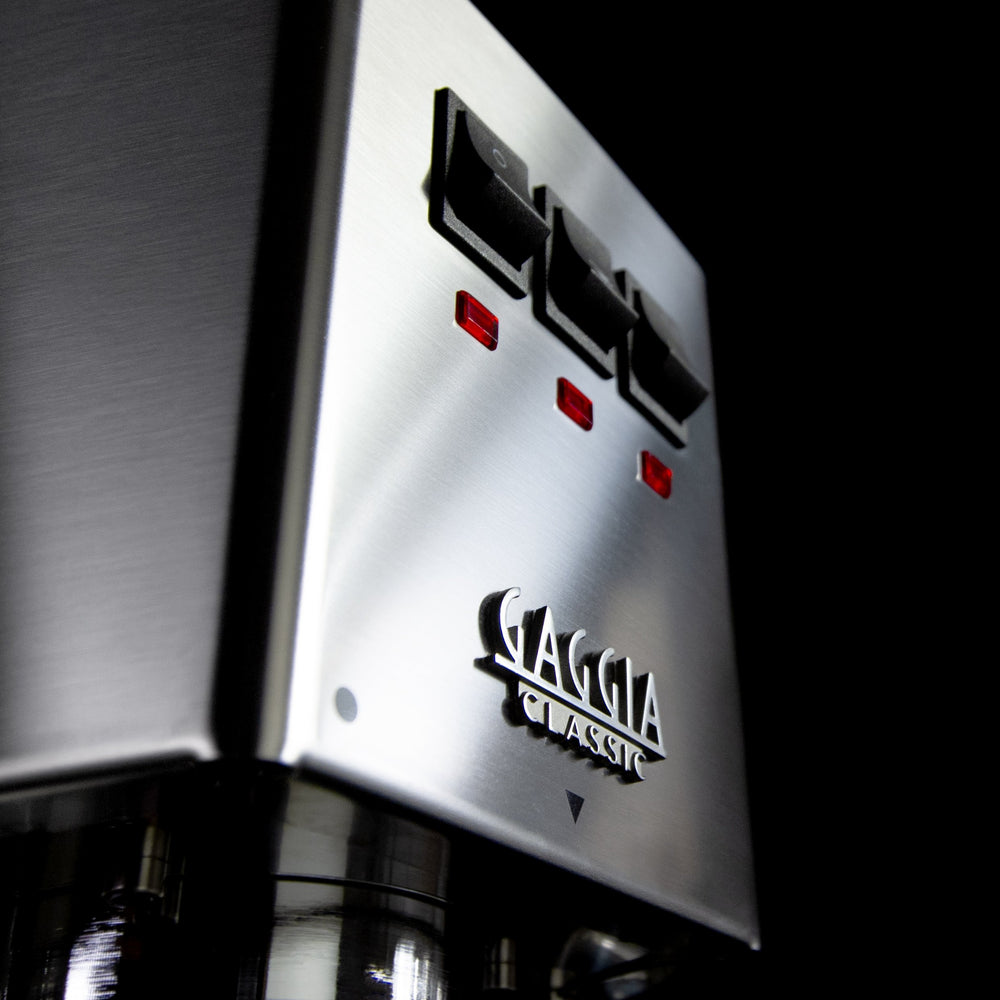
The Maestro at $999 is a fully automated grind-to-cup machine that handles tamping, dosing, and milk frothing with minimal user input. The Gaggia Classic Pro at $449 is a barebones commercial-grade machine that demands a separate grinder, manual technique, and patience. Add a grinder to the Gaggia and total cost reaches $650-800 — half the Maestro's price for a machine with a higher ceiling but a much steeper climb to get there.
Spec face-off
Bars scaled to the higher value. Coloured = wins that spec.
Full specifications
Strengths & weaknesses

Full comparison
The Maestro and Gaggia represent opposite philosophies at somewhat similar total costs. The Maestro at $999 packages everything — grinder, smart tamping, automatic milk frothing — into one system designed to minimize the skill barrier. The Gaggia Classic Pro at $449 ships bare: no grinder, no pressure gauge, no temperature control beyond the factory thermostat. You need to add a grinder ($150-250), and ideally a PID mod ($80-150) to get consistent results. Total investment: $680-850 against the Maestro's $999.
The Gaggia's case rests on hardware quality and long-term ceiling. Its 58mm commercial-grade group head is the real thing — the same standard used in professional machines — and the all-stainless body is serviceable for 10-20 years. The Maestro uses a 51mm portafilter, limiting basket and accessory options compared to the Gaggia's wide-open 58mm ecosystem. Once the Gaggia is properly dialed in with a good grinder and optionally a PID, its extraction quality competes with machines well above its price.
The Maestro's Smart Tamping Station automates one of the most common beginner errors, and the LatteCrema system handles milk frothing without manual technique. For users who want good lattes every morning without investing time in skill development, that automation is genuinely valuable. The Gaggia's steam wand is a real professional-style wand capable of true microfoam — better technique potential, but it requires the user to develop that technique.
Buy the Maestro if you want an all-in-one machine that removes friction and handles the technical steps for you. Buy the Gaggia if you're committed to learning espresso craft, already own or plan to buy a quality grinder, and want commercial-grade hardware with a high long-term ceiling. The Gaggia rewards patience; the Maestro rewards convenience.