Breville Barista Express vs De'Longhi La Specialista Maestro EC9665
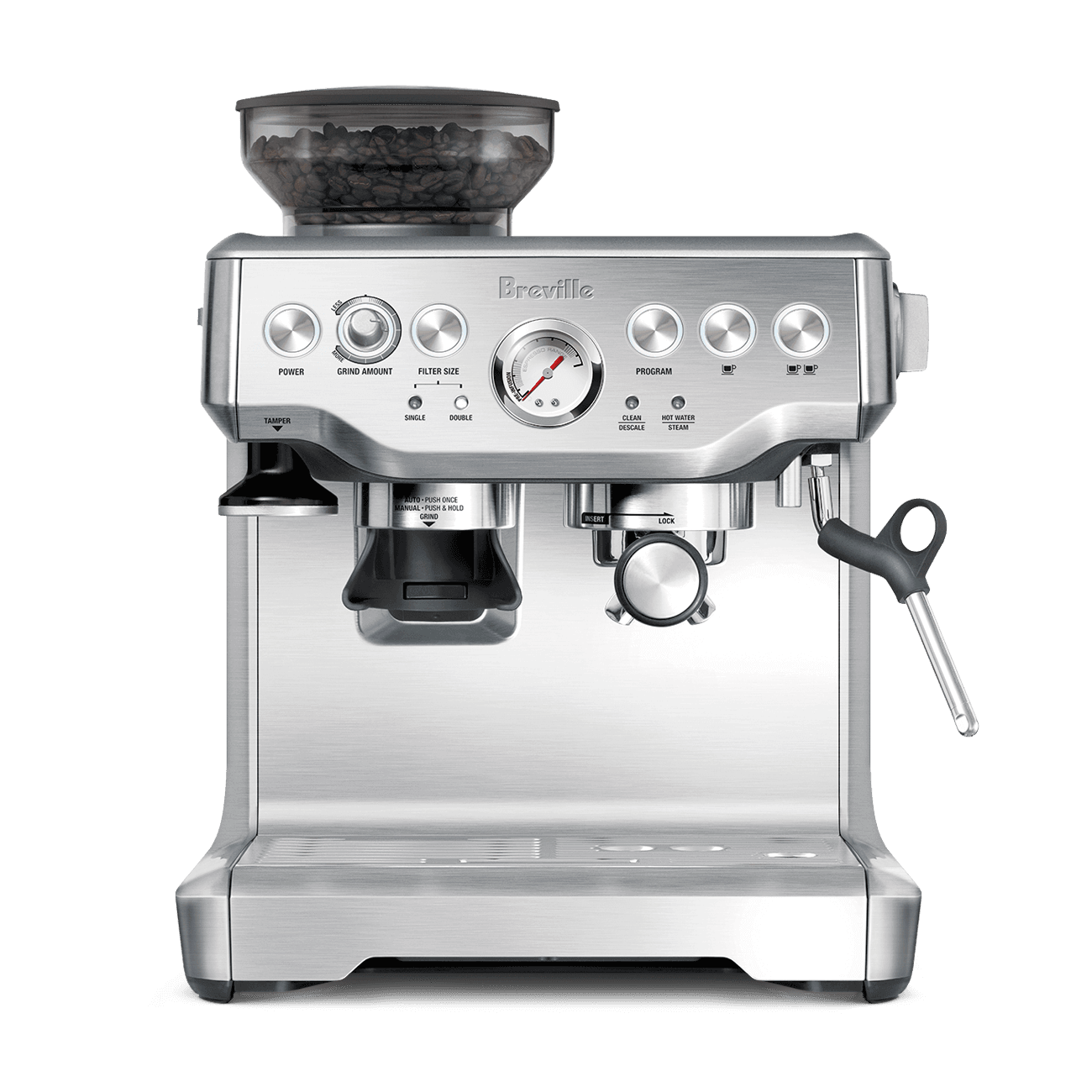
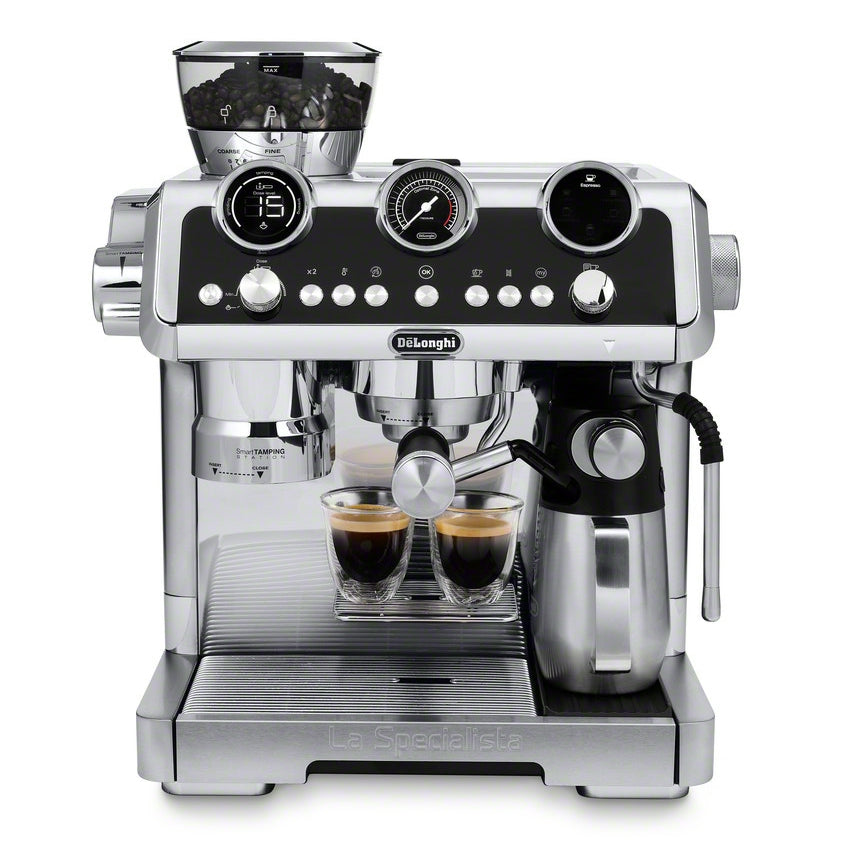
The Barista Express at $699 gives you more manual control and a lower entry price. The La Specialista Maestro at $999 adds automatic smart tamping, sensor-based grind dosing, auto milk frothing, and a cold extraction mode. If you want hands-on espresso craft, save $300. If you want automation that grows with you, the Maestro earns the premium.
Spec face-off
Bars scaled to the higher value. Coloured = wins that spec.
Full specifications
Strengths & weaknesses
Full comparison
The $300 price gap between the Barista Express ($699) and the Maestro ($999) maps to a meaningful automation difference. The Maestro's Smart Tamping Station automates tamping pressure, removing one of the most common beginner errors. Its sensor-based grinder auto-adjusts grind time for consistent dosing. The LatteCrema automatic milk system produces consistently silky foam without manual wand technique. The Barista Express requires you to handle all of those steps manually, every shot.
For someone who views espresso making as a craft to develop, the Express is the better machine. Its 16 grind settings, PID temperature control within 1 degree F, and dual basket system (pressurized and non-pressurized) give a learner real tools. The manual workflow reinforces skill development. The Maestro's automation, by contrast, abstracts away the variables that teach technique.
The Maestro does something no Breville machine in this range does: Cold Extraction Technology that brews cold espresso in roughly 5 minutes. For households that make cold lattes regularly, that's a genuine differentiator. The Maestro also has the LatteCrema auto milk system, which the Barista Express lacks entirely.
One important note on the Maestro: it uses a 51mm portafilter rather than the industry-standard 58mm, meaning aftermarket baskets and accessories are harder to source. The Barista Express's 54mm portafilter is also non-standard, but the 51mm is a more limiting constraint. If long-term accessory flexibility matters, the Express has a small edge. If convenience and automation matter more, the Maestro's $300 premium is justifiable.