Breville Barista Touch vs De'Longhi La Specialista Maestro EC9665
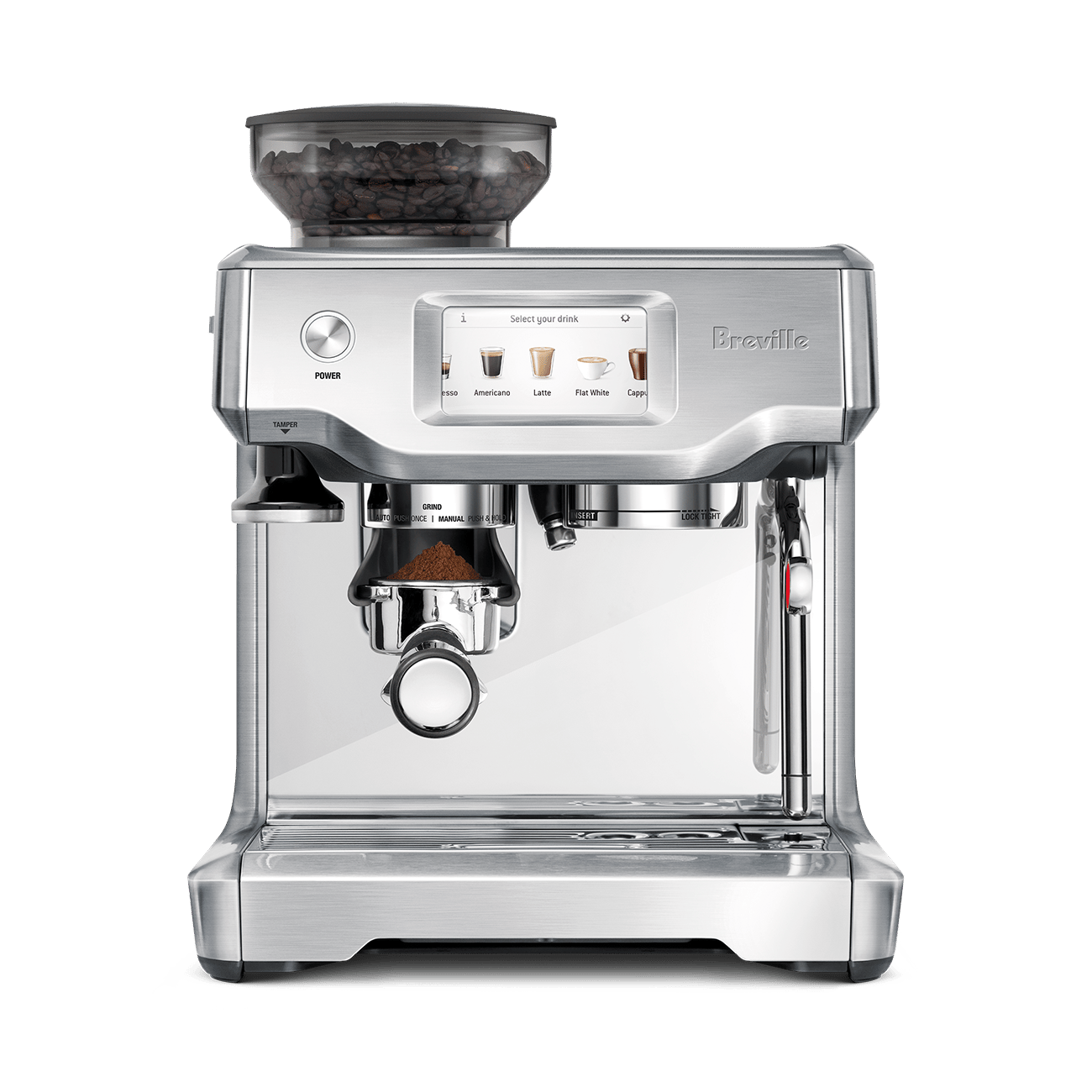
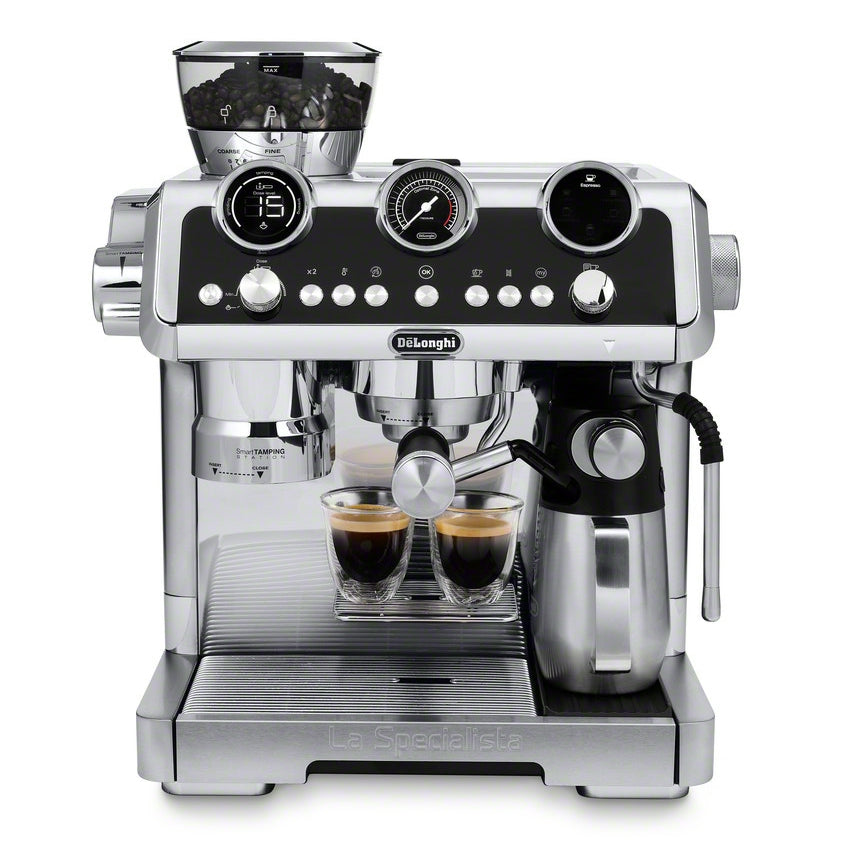
Buy the Barista Touch ($1,199) if you prioritize automatic milk texturing with programmable temperature and foam density. Buy the La Specialista Maestro ($999) if you want automatic smart tamping and a cold espresso extraction mode, and do not mind manual milk steaming. These machines are the closest head-to-head in this batch — the $200 price gap is smaller than their capability differences suggest.
Spec face-off
Bars scaled to the higher value. Coloured = wins that spec.
Full specifications
Strengths & weaknesses
Full comparison
At $200 apart, the Barista Touch and La Specialista Maestro are the most directly competing machines in this comparison set. Both are grind-to-cup all-in-ones with built-in conical burr grinders, automatic milk systems, and low learning curves. The key differentiators are where their respective automation lands. The Touch automates milk texturing via a programmable wand with 8 foam-density settings and temperature control between 110-170°F. The Maestro automates tamping via its Smart Tamping Station, removing one of the most common beginner errors in espresso prep.
The Maestro also includes Cold Extraction Technology, which brews cold espresso in roughly 5 minutes — a feature essentially absent from competitors at this price tier, including the Touch. Its LatteCrema automatic milk system produces consistently silky foam and works with both dairy and plant-based milks. However, the Maestro uses a 51mm portafilter rather than the Touch's 54mm, limiting aftermarket basket sourcing. The Touch's 30-setting grinder offers more precision than the Maestro's grinder, which reviewers consistently flag as having too few settings for precise dialing.
Both machines are single-boiler designs, so neither can brew and steam simultaneously. The Touch's pre-infusion is fixed at 10 seconds with no user adjustment — a real limitation for advanced users. The Maestro's dynamic pre-infusion adapts to dose weight, which is a genuine technical advantage. Both touchscreen interfaces are comparable in usability, and both machines carry similar reliability concerns in the $900-$1,200 tier.
For buyers who make cold espresso drinks, the Maestro at $999 is the obvious choice. For buyers who want the most control over milk temperature and foam texture, the Touch's programmable wand at $1,199 is worth the $200 premium. Neither machine is the wrong choice — pick based on which automation you will actually use daily.