Breville Barista Touch vs Rancilio Silvia
Buy the Rancilio Silvia ($749) if you want to learn real espresso craft on commercial-grade hardware with a 15-20 year lifespan — and are willing to add a quality grinder and tolerate a steep learning curve. Buy the Barista Touch ($1,199) if you want automatic milk texturing, a built-in grinder, and results without years of technique development. The Touch costs more upfront; the Silvia costs more in skill and patience.
Spec face-off
Bars scaled to the higher value. Coloured = wins that spec.
Full specifications
Strengths & weaknesses

Full comparison
The Rancilio Silvia at $749 and the Barista Touch at $1,199 are $450 apart at face value, but the Silvia requires a quality standalone grinder — budget $200-400 — closing the real cost gap to somewhere between zero and $150 depending on grinder choice. At near-equal all-in cost, these machines make very different promises.
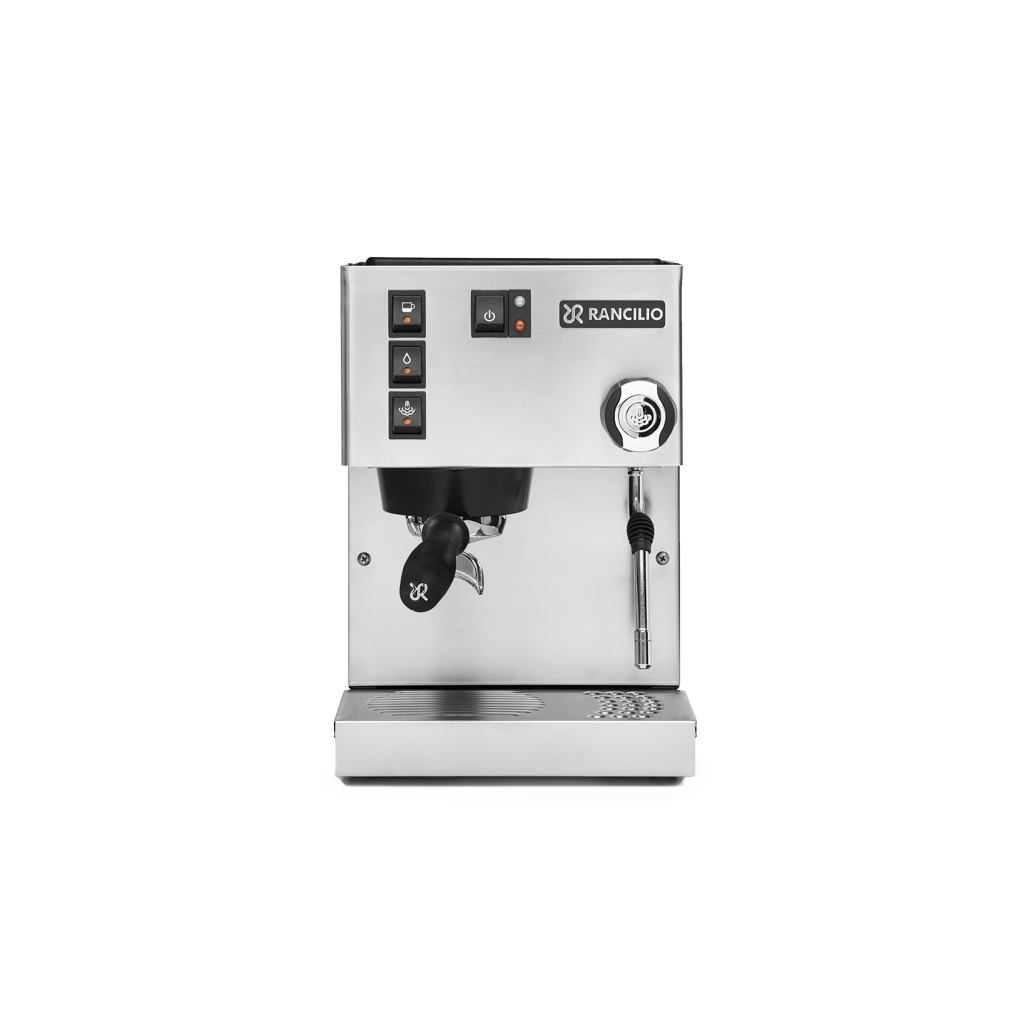
The Silvia's promise is authenticity and longevity. Its group head, portafilter, and internal components are derived directly from Rancilio's commercial production line — not consumer-grade approximations. The all-metal construction (steel case, brass boiler) is built to last 15-20+ years with basic maintenance. Its professional-style steam wand produces exceptional microfoam on par with commercial machines. Units from the early 2000s are still in daily use; replacement parts remain widely available. The Silvia also has one of the deepest aftermarket modification communities of any home espresso machine, meaning a PID retrofit can be added later to address its main weakness (stock temperature inconsistency) without replacing the unit.
The Touch's promise is immediate, consistent, convenient results. Its automatic steam wand with 8 foam-density increments and programmable temperature control between 110-170°F produces reliable microfoam without any technique requirement. Its 30-setting conical burr grinder eliminates a separate purchase. Touchscreen profiles store grind size, dose, brew time, milk temperature, and foam texture together, so every morning drink repeats identically. Build longevity is estimated at 4-6 years — significantly shorter than the Silvia.
The deciding factor is your relationship with the craft. If you see espresso as a skill worth developing over years, the Silvia plus a quality grinder is the better investment — it rewards effort with quality that the Touch's automation caps out below. If you want reliable daily results today without a learning curve, the Touch is the right machine despite costing more and lasting fewer years.