Breville Barista Touch vs Breville Oracle
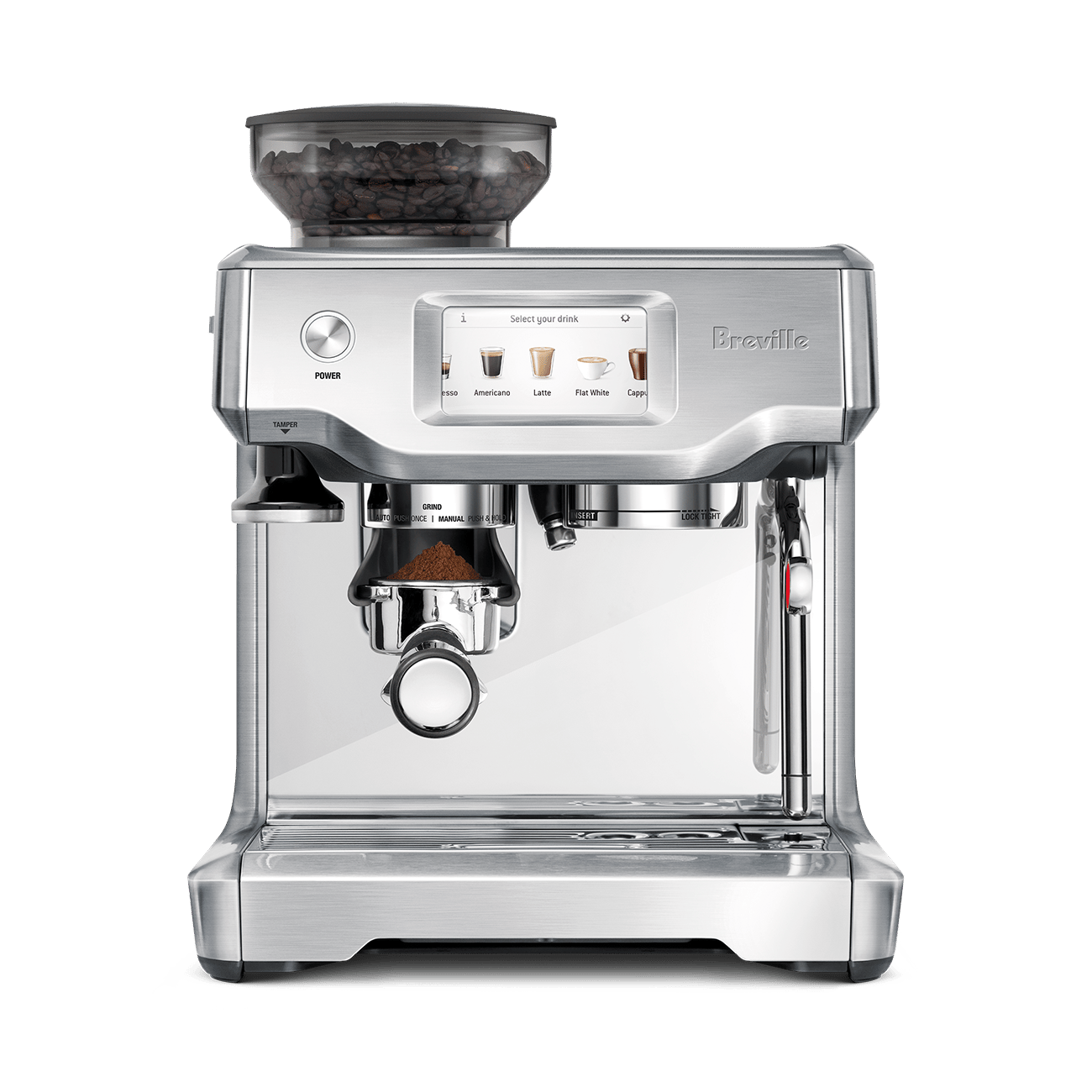
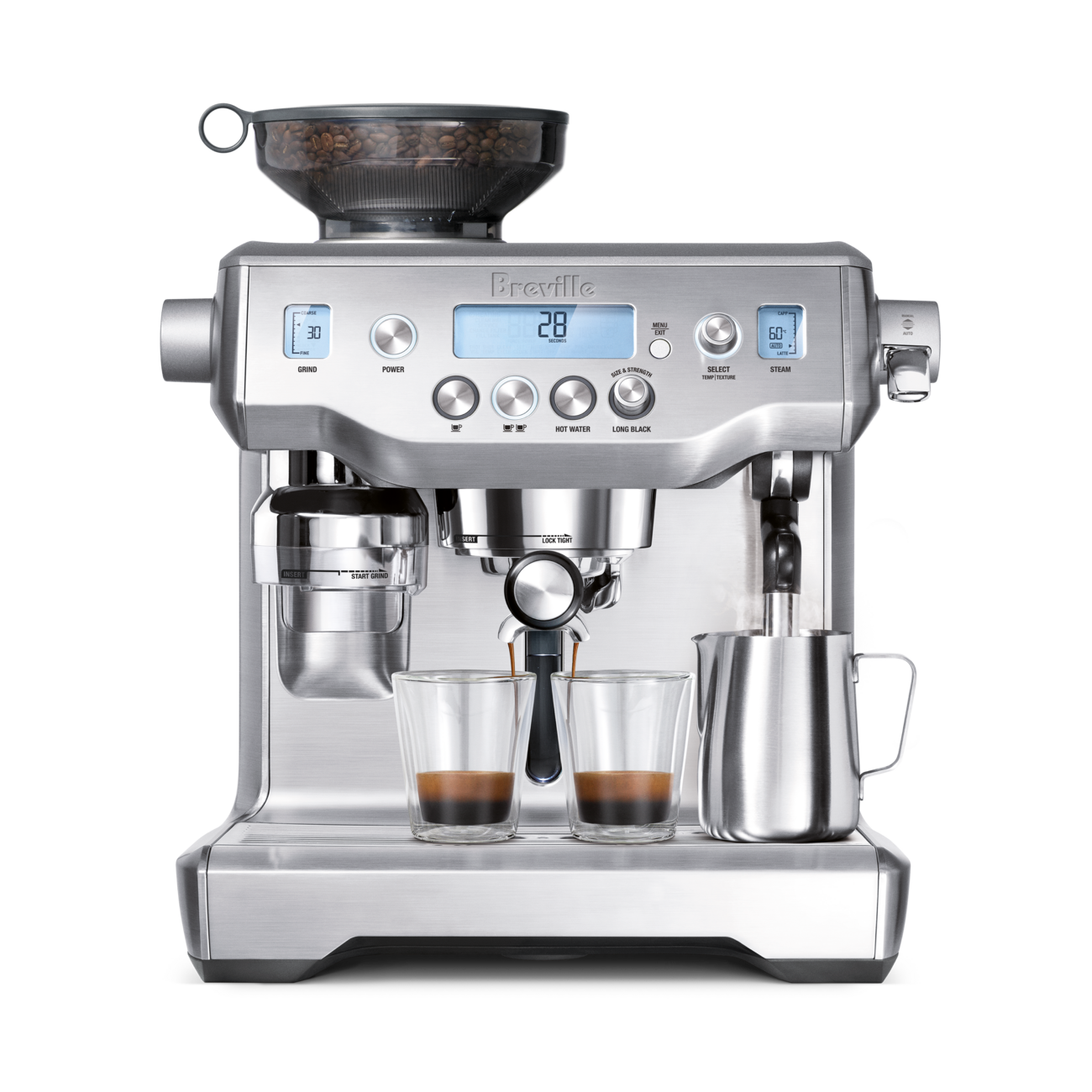
Buy the Oracle ($2,799) if you want automatic grinding, dosing, and tamping with dual-boiler performance and are willing to pay $1,600 more for a near-hands-free workflow. Buy the Barista Touch ($1,199) if you want most of the convenience benefits — auto milk, built-in grinder, touchscreen — without spending nearly three times as much. The Oracle closes the last manual steps the Touch still requires; whether that is worth the price gap depends entirely on your budget and tolerance for dialing in.
Spec face-off
Bars scaled to the higher value. Coloured = wins that spec.
Full specifications
Strengths & weaknesses
Full comparison
The Oracle costs $1,600 more than the Barista Touch, and that gap buys three specific things: automatic tamping, automatic dosing via dual distribution blades, and a genuine dual-boiler system that lets you brew and steam simultaneously. The Touch automates milk texturing and has a built-in grinder, but you still grind, dose to the basket, and tamp by hand. For users who want to remove every manual step from the espresso workflow, the Oracle is the only Breville machine that does it.
The dual-boiler difference is significant for milk drink throughput. With the Oracle, you can run the steam wand while a shot is pulling, cutting a latte to a single uninterrupted process. The Touch requires you to finish the shot, switch thermal modes, and then steam — adding 30-60 seconds per drink. Both machines use ThermoJet heating for the brew boiler, but the Oracle adds a separate dedicated steam boiler with its own PID, giving more consistent steam pressure than the Touch's single boiler.
Shot quality at the extraction level is comparable between the two in practice. Both machines have a 58mm (Oracle) versus 54mm (Touch) portafilter difference — the Oracle uses the wider professional standard, which provides marginally more even extraction geometry and broader accessory compatibility. The Touch's 54mm is functional but non-standard. The Oracle's grinder also uses a more refined dosing mechanism, though its timer-based mode in manual operation can show dose variance of 3-5g.
For most home users, the Barista Touch at $1,199 hits a strong value ceiling. The Oracle is a legitimate upgrade — not marketing padding — but the gains it delivers (automated tamping, simultaneous brew-steam, 58mm portafilter) matter most to users who already understand espresso and want to remove friction from an established daily routine. First-time buyers who are new to espresso will not extract meaningful value from the Oracle's extra $1,600 investment.