Breville Barista Express vs Breville Oracle

Winner
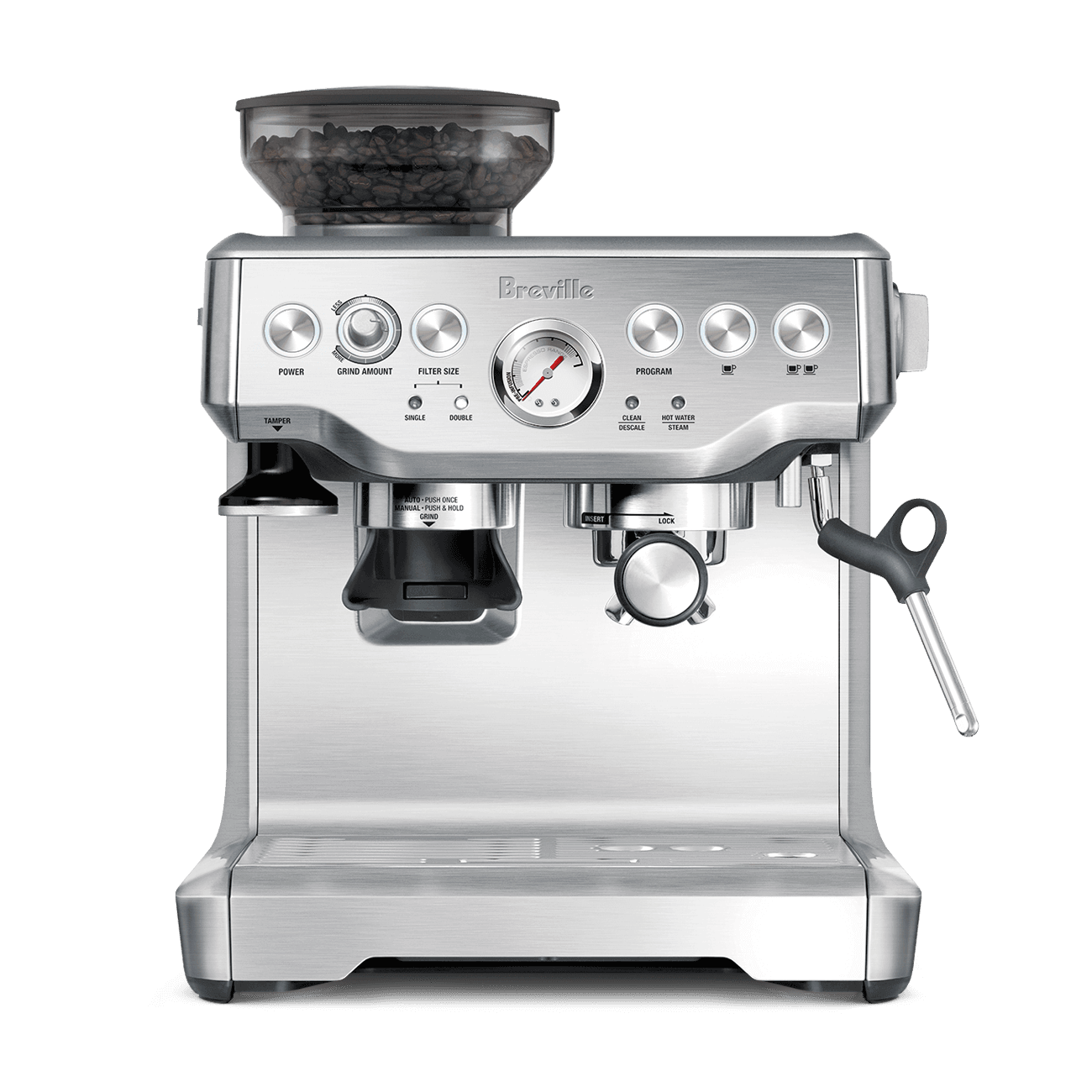
Breville Barista Express
Breville
Barista Express
$699.95 Mid-Range
Check price
vs
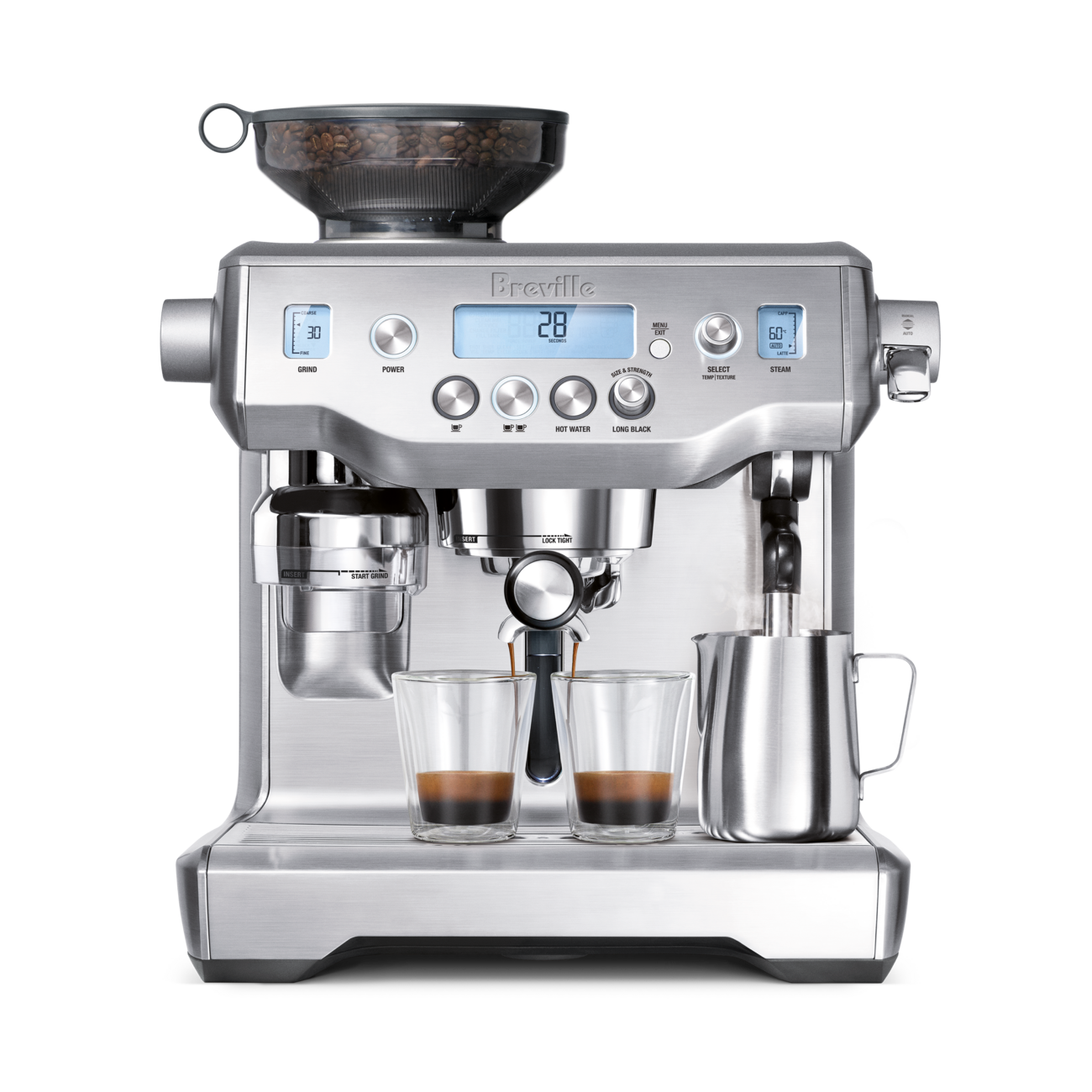
Breville Oracle
Breville
Oracle
$2,199.95 Prosumer
Check price
Head-to-head scoreboard
Barista Express · 2 2 TIES 1 · Oracle
The verdict

The Barista Express at $699 is for someone who wants to learn espresso. The Oracle at $2,799 is for someone who wants consistently excellent espresso without learning it. If the craft and the skill development are part of what you're paying for, the Express is the right machine. If you want the result without the process, the $2,100 premium for the Oracle makes sense.

Spec face-off

Bars scaled to the higher value. Coloured = wins that spec.

Barista Express
Oracle
9 bar
Pressure
9 bar
54 mm
Portafilter
58 mm
9.3 kg
Weight
17.8 kg

Full specifications

Spec
Barista Express
Oracle
Price
$699.95
$2,199.95
Pressure
9 bar
9 bar
Portafilter
54 mm
58 mm
Weight
9.3 kg
17.8 kg
Boiler
single thermocoil
dual
Grinder Burrs
conical 54mm
conical 58mm
Steam Wand
Yes
Yes
Milk Frother
manual
automatic
Dimensions
33 x 31 x 40
40 x 40 x 46

Strengths & weaknesses

Breville Barista Express
Strengths
Built-in conical burr grinder with 16 grind settings eliminates the need for a separate grinder, reducing total setup cost by $100-$200+
PID temperature control holds brewing temperature within ±1°F, a feature typically found only on more expensive machines
Dual filter basket system (pressurized and non-pressurized) lets beginners use the forgiving pressurized basket and graduate to the precision basket as skills improve
Trade-offs
Integrated grinder is a single point of failure
Grinder clumps at fine settings, requiring a distribution tool (WDT) to get consistent puck prep
Single-boiler design means you must wait for the machine to switch thermal modes between brewing and steaming, slowing milk-drink workflow
Breville Oracle
Breville Oracle
Strengths
Integrated conical burr grinder with automatic dosing and auto-tamping via dual distribution blades removes the two most skill-dependent steps in espresso making
Dual PID-controlled stainless steel boilers maintain brew temperature within ±1°F and enable true simultaneous brewing and steaming with no recovery lag
Professional 58mm group head with pre-infusion delivers extraction quality comparable to standalone prosumer machines costing $1,500+
Trade-offs
Grinder in manual mode is unreliable due to timer-based dosing, with dose variation up to ±3–5g
Real-world lifespan of 5–7 years with solenoid valve failures and $500–780 repair costs reported routinely after year 3
Automatic milk texturing achieves only roughly 60–70% success rate; the wand temperature can spike quickly

Full comparison

The Oracle and the Barista Express are philosophically opposite machines sold under the same brand name. The Oracle automates grinding, dosing, and tamping via dual rotating distribution blades, then pulls the shot through a professional 58mm group head with dual PID-controlled stainless steel boilers. The Barista Express requires you to grind, distribute, tamp, and extract manually every time. The $2,100 price gap buys the automation and the dual-boiler hardware.

Shot quality, when everything goes right, is comparable. The Oracle's 58mm group head with pre-infusion produces extraction on par with standalone prosumer machines costing $1,500 or more. The Express at its ceiling, with proper technique and puck prep, produces shots that are genuinely close. The Oracle's advantage is consistency: an automatic tamp that outperforms most manual home tampers, shot-to-shot, without fatigue or variation.

The Oracle also enables simultaneous brewing and steaming through its dual-boiler design, something the single-boiler Express cannot do. For households making two or three lattes per morning, the Express's thermal-switching workflow becomes a real friction point that the Oracle eliminates entirely.

The honest caveats on the Oracle: the grinder in automatic mode has documented dose variance of up to 3-5g, the real-world lifespan is 5-7 years with $500-780 repair costs common after year three, and the automatic milk texturing achieves roughly 60-70% success rate. At $2,799 those are meaningful limitations. The Express is not an Oracle alternative. It's a different machine for a different buyer.

More espresso machines matchups