De'Longhi La Specialista Arte EC9155 vs De'Longhi La Specialista Maestro EC9665
Buy the Arte at $699 if you want to practice real manual espresso skills — grinding, tamping, and hand-steaming — with guided tools to flatten the learning curve. Pay the $300 premium for the Maestro at $999 only if automatic tamping and hands-free milk frothing via the LatteCrema system are genuine priorities. Both machines share the same single-boiler limitation and similar grinder quality, so the Maestro's extra cost buys automation, not better espresso.
Spec face-off
Bars scaled to the higher value. Coloured = wins that spec.
Full specifications
Strengths & weaknesses

Full comparison
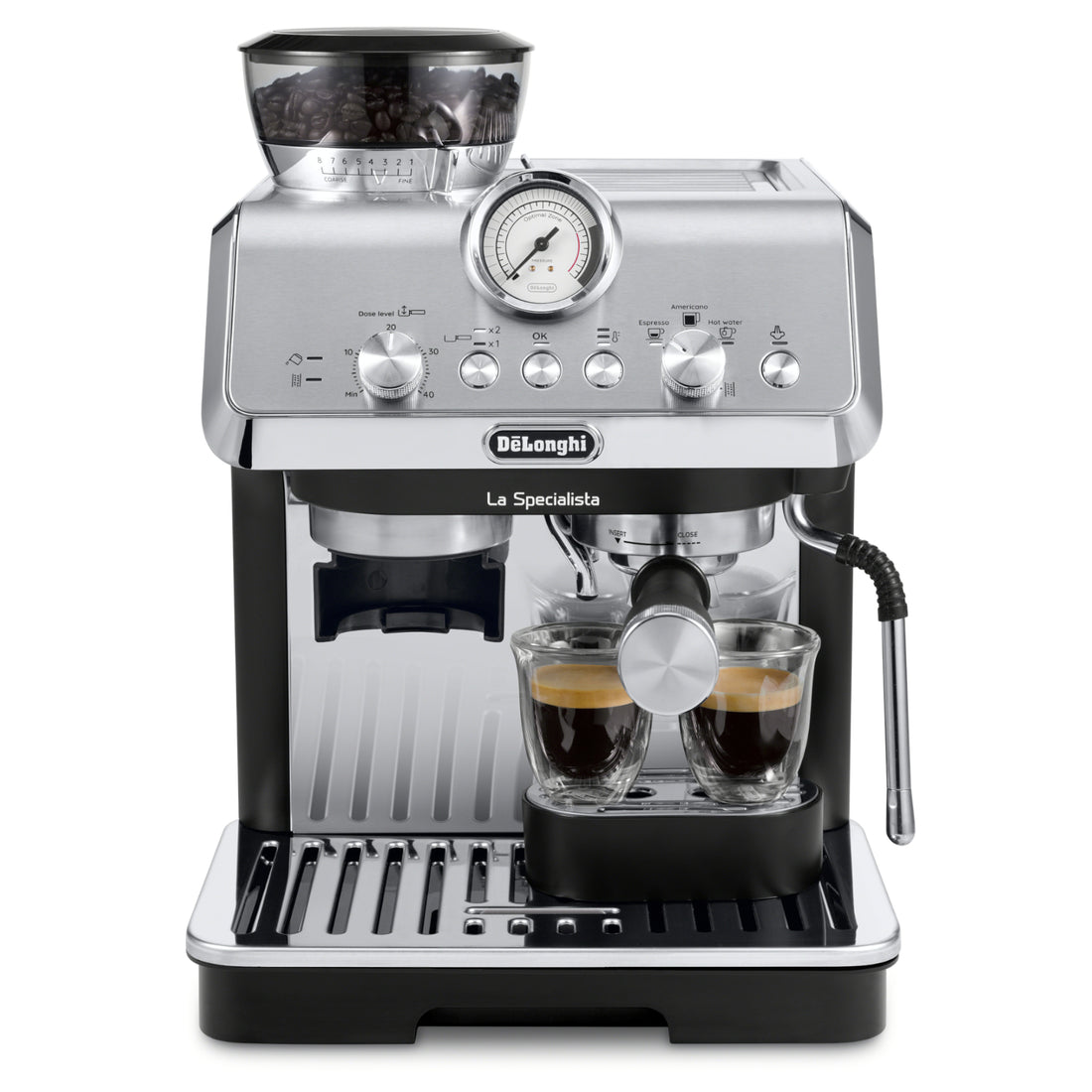
The Arte and Maestro are siblings separated by $300 and a bundle of automation features. The Arte sits at $699 and keeps you in manual control throughout: you grind, you tamp using the built-in tamper dock, and you texture milk by hand with the My LatteArt steam wand. The Maestro at $999 automates the tamping step via its Smart Tamping Station and replaces the manual wand with the LatteCrema automatic milk system. For users who want to build real barista skills, the Arte's manual workflow is a feature, not a gap.
The two machines share the same fundamental architecture: single boiler, integrated conical burr grinder, built-in pressure gauge, and active temperature control. Neither can brew and steam simultaneously. Both use a 51mm portafilter, which limits aftermarket basket options compared to the industry-standard 58mm. The Maestro's grinder adds sensor-based dosing that auto-adjusts grind time for consistency, which is a meaningful edge for beginners who struggle to eyeball dose weight. The Arte's grinder offers 8 settings and requires more manual attention.
The Maestro adds one feature the Arte completely lacks: Cold Extraction Technology, which brews cold espresso in roughly 5 minutes. It's a niche capability, but there's nothing comparable on the Arte or on most rivals at either price point. The LatteCrema system also handles plant-based milks reliably, which matters for households where not everyone uses dairy.
The deciding factor is honest self-assessment. If you want to learn espresso properly, the Arte saves you $300 and keeps you hands-on. If you want consistently good lattes with less daily friction and don't mind paying for automation, the Maestro earns its premium. Neither machine is a path to prosumer-level espresso — both are limited by the 51mm portafilter and single-boiler design — so don't pay $999 expecting professional results.