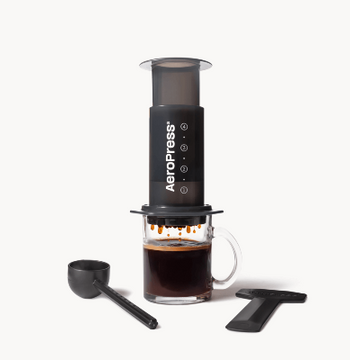
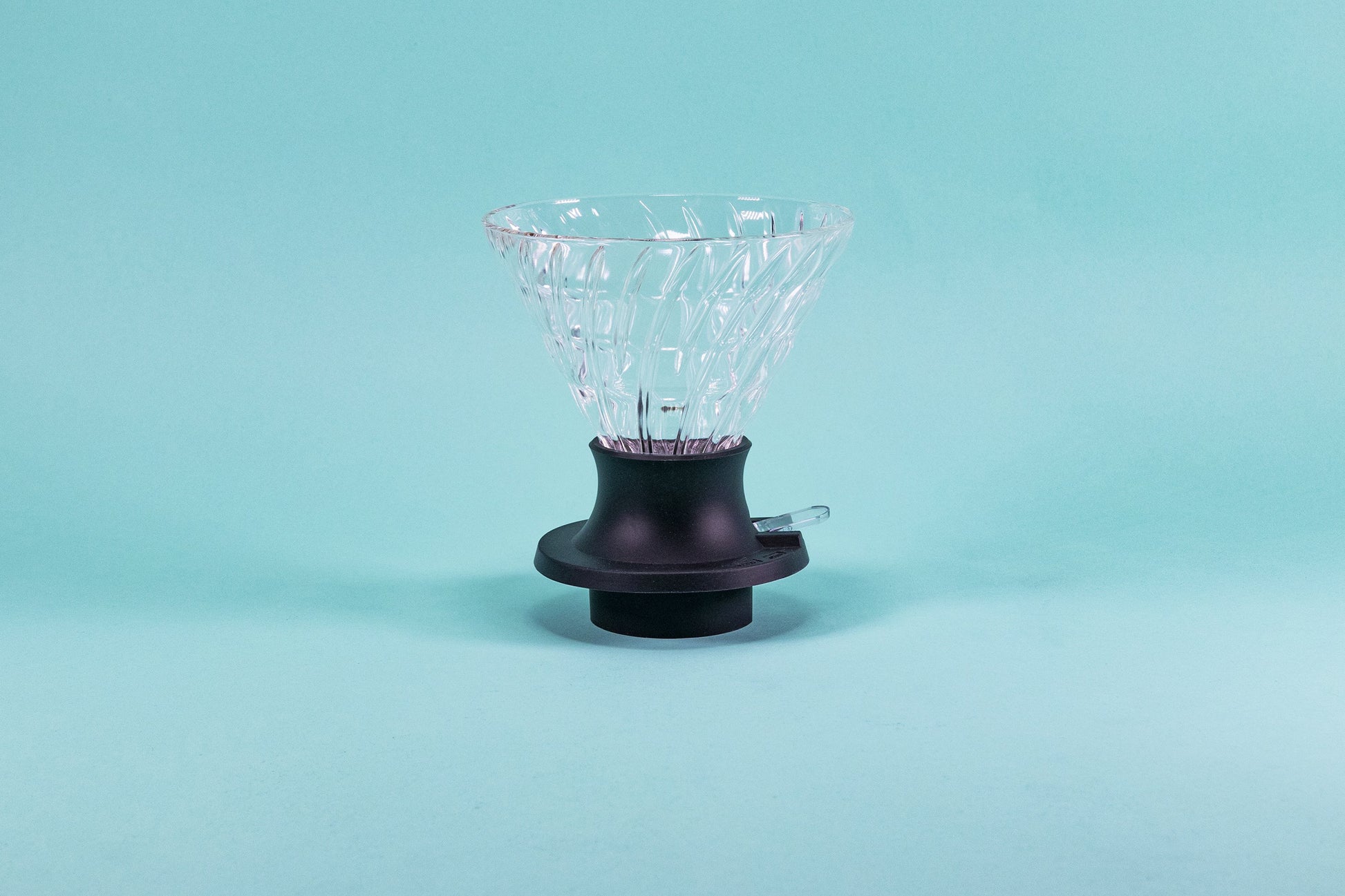
The AeroPress Original offers more pressure-based versatility, while the Hario Switch lets you toggle between immersion and pour-over styles in one compact brewer.
Which should you buy?
Match the row to your routine — the winning side is who we'd pick.
Brewing a single cup at the desk during the workday
AeroPress AeroPress Original
Inverted method, 90-second total, rinses in 10 seconds. The Switch needs cup-and-stand and a kettle pour.
Want pour-over technique but hate the failure rate
Hario Immersion Switch
Switch's valve gives you immersion as a safety net — close valve, steep, open valve, drain. Hard to mess up.
Travel — backpack brewing, hotel rooms, hostels
AeroPress AeroPress Original
Plastic body shrugs off a backpack. Glass Switch needs a sleeve and a careful hand.
You like multiple brew methods in one device
Hario Immersion Switch
Switch toggles immersion ↔ pour-over by flipping a valve. AeroPress is great at AeroPress; less interesting as a V60 substitute.
Brewing for two
Hario Immersion Switch
300ml capacity vs AeroPress's 240ml. Switch handles a couple's morning cups in one go.
Want cold brew concentrate or pressurized 'espresso-style'
AeroPress AeroPress Original
Piston pressure and inverted method give the AeroPress a unique range no flat dripper can match.
Spec face-off
Bars scaled to the higher value. Coloured = wins that spec.
AeroPress Original
Immersion Switch
240 ml
Capacity
300 ml
0.43 kg
Weight
0.35 kg
Full specifications
Spec
AeroPress Original
Immersion Switch
Price
$40
$50
Capacity
240 ml
300 ml
Weight
0.43 kg
0.35 kg
Brew Method
immersion_pressure
immersion_pour_over
Material
plastic
glass
Filter Type
paper/metal
paper
Strengths & weaknesses
AeroPress AeroPress Original
Strengths
User-generated pressure (0.3-0.7 bar via plunger force) enables extraction styles impossible in any gravity or immersion brewer
Inverted brewing method allows full immersion control with no drip-through
Paper and metal filters both work without modification
Trade-offs
240ml maximum capacity limits it to single servings
Inverted method (the most popular community technique) requires inverting a hot-liquid-filled brewer
Pressure generated by human plunger force is inconsistent between users and sessions
Hario Immersion Switch
Strengths
Switch valve holds water in contact with grounds for user-controlled immersion time
Compatible with all standard V60 02 filters and Hario paper filters
Glass body for material-neutral extraction and full visual brewing feedback
Trade-offs
Ball valve mechanism requires periodic cleaning to prevent coffee oils from slowing or blocking the valve seal
300ml single-cup capacity limits batch brewing
Glass body is more susceptible to thermal shock from rapid temperature changes than ceramic V60 alternatives
Full comparison
The AeroPress Original at $40 and the Hario Switch at $50 are both compact manual brewers that fit easily in a bag, but their mechanisms differ meaningfully. The AeroPress uses a piston to create pressure, pushing water through grounds and a filter in a way no other brewer replicates. The Hario Switch uses a simple valve that opens or closes the bottom of the dripper, toggling between immersion steeping and free-flow pour-over without any pressure involved.
Both brewers produce clean cups when used with paper filters, though the AeroPress can also use a metal filter for a heavier body. The Hario Switch is limited to paper filters, which deliver its characteristic brightness and clarity. The Hario Switch also pairs naturally with a pour-over setup if you want to refine your technique, while the AeroPress inverts the process entirely. Each brewer has an active enthusiast community with extensive recipe libraries available online.
At $40 the AeroPress is the better value if you want maximum versatility in a single brewer. It can produce espresso-style concentrate, long pulls, cold brew concentrate, and standard cups. The Hario Switch at $50 is a better fit if your interest is specifically in immersion or pour-over coffee and you want one tool that handles both. Portability is similar, with the Hario Switch slightly lighter at 0.35kg versus 0.43kg for the AeroPress.
What owners actually report
Paraphrased from long-running owner threads and review write-ups.
AeroPress AeroPress Original
What owners praise
Genuinely indestructible. AeroPress owners frequently report the same unit lasting 10+ years through college, travel, and dishwashers.
Recipe ecosystem is massive — World AeroPress Championship recipes are public, repeatable, and improve your brews for free.
Common complaints
Filters are tiny and easy to lose; a Prismo or Fellow Prismo metal filter ($20) solves it permanently.
Plunger seal can degrade after 2–3 years of heavy use; AeroPress sells replacement plungers for ~$10.
Hario Immersion Switch
What owners praise
The valve is the killer feature — bad pour-over technique becomes good immersion technique with one flip.
Cleans easier than a V60 because the body is the cup-stand and you can rinse it in one motion.
Common complaints
Glass body cracks if dropped on tile; a third-party silicone sleeve ($8) is the common protection mod.
Valve can stick after a year of daily use if not rinsed properly; a quick soak in hot water unsticks it.
No — true espresso requires 9 bar of pressure; the AeroPress generates roughly 0.5–1 bar. It produces espresso-style concentrate, which works in lattes but isn't espresso.
Is the Hario Switch better than a V60?
Different tools. Switch is forgiving via immersion fallback; V60 is the technique-rewarding pour-over. Beginners often prefer the Switch; technique-focused brewers go V60.
Will the Hario Switch break easily?
It's borosilicate glass — durable but not impact-proof. A $8 silicone sleeve makes it kitchen-friendly. Don't pack it in a backpack without padding.
Does the AeroPress work with metal filters?
Yes — the Prismo and Fellow Prismo (~$20) drop in. Metal filters give a heavier body cup with more oils, closer to a french press in mouthfeel.
Which is faster to clean?
AeroPress — eject the puck into a bin, rinse the plunger, done in 10 seconds. The Switch needs filter removal, valve rinse, and glass wash.